
Laparoscopic Surgery: What It Is and Why Recovery May Be Easier

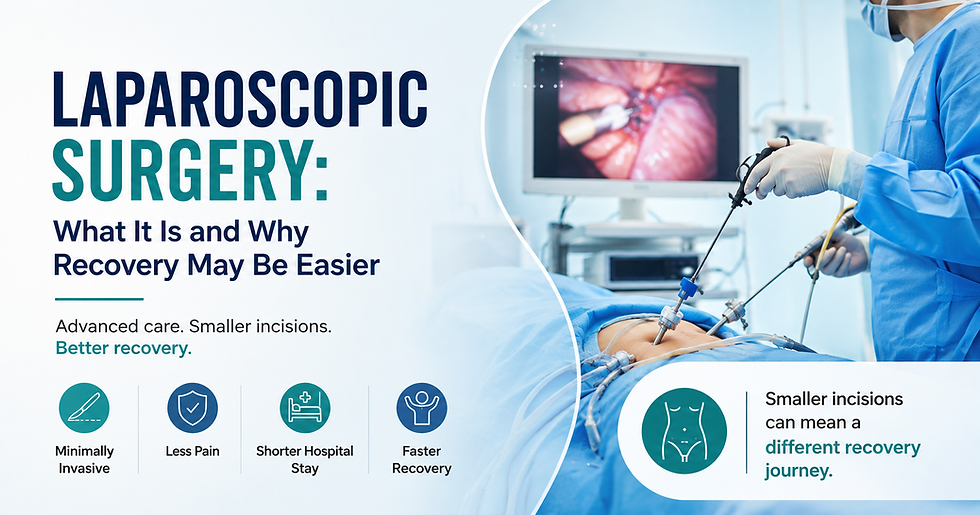
Smaller incisions can mean a different recovery journey. What is laparoscopic surgery?
When surgery is recommended, one of the first questions patients and families often ask is: “Will I need a large incision, and how long will recovery take?”
Advances in general surgery have made it possible to perform many procedures through small incisions using a camera and specialised surgical instruments. This approach is commonly known as laparoscopic surgery, or “keyhole surgery.”
For appropriately selected patients, laparoscopic surgery may offer benefits such as smaller incisions, less postoperative discomfort, shorter hospital stays and an earlier return to normal activities. However, minimally invasive does not mean minor, and laparoscopic surgery is not suitable for every patient or every condition. The right approach depends on the diagnosis, complexity of the procedure, the patient's overall health and the surgeon's clinical assessment.
For patients researching laparoscopic surgery in Kandivali, minimally invasive surgery in Mumbai or general surgery recovery, understanding what the procedure involves can make discussions with a surgeon much easier.
What Is Laparoscopic Surgery?
Laparoscopic surgery is a form of minimally invasive surgery in which the surgeon operates through small openings rather than one large incision.
A thin instrument called a laparoscope, which has a camera and light, is inserted through one of the small incisions. The camera projects magnified images onto a monitor, allowing the surgical team to see the operating area.
Additional small incisions may be made so that specialised surgical instruments can be inserted and the required procedure performed.
Because the abdominal wall generally does not need to be opened through a single large incision, the approach can reduce the amount of tissue disruption associated with some open procedures.
In simple terms:
Open surgery:One larger incision provides access to the surgical area.
Laparoscopic surgery:Several smaller incisions allow a camera and surgical instruments to access the area.
The choice between these approaches is not simply about choosing the “smaller” option. The priority is always performing the safest and most appropriate procedure for the patient's condition.
Why Is Laparoscopic Surgery Called Minimally Invasive?
The term minimally invasive surgery refers primarily to how the surgeon accesses the body—not to how serious the underlying condition or operation may be.
A laparoscopic operation may still be a major surgical procedure and may require general anaesthesia, hospital observation and a structured recovery period.
The difference is that the surgical access may involve smaller incisions and less disruption of surrounding tissues compared with an equivalent open operation.
This can influence what the recovery period looks like.
What Are the Potential Benefits of Laparoscopic Surgery?
When laparoscopic surgery is appropriate for a particular condition, patients may experience several potential advantages.
1. Smaller Incisions
One of the most visible differences is the size of the surgical incisions.
Smaller incisions can mean:
Smaller scars
Less disruption of the abdominal wall
Potentially less wound discomfort
Easier wound care in some cases
The actual number and size of incisions depend on the procedure being performed.
2. Potentially Less Postoperative Pain
Because laparoscopic procedures generally use smaller access points, some patients experience less pain during recovery compared with equivalent open procedures.
This does not mean that laparoscopic surgery is pain-free.
Patients can still experience discomfort around the incision sites. Some people may also experience temporary abdominal bloating or shoulder discomfort because gas is used during many laparoscopic procedures to create working space inside the abdomen.
Pain levels can also vary considerably depending on:
The type of operation
The extent of surgery
Individual pain tolerance
Overall health
Postoperative care
3. Recovery May Be Easier for Some Patients
One of the reasons patients ask about laparoscopic surgery benefits is the possibility of an easier postoperative recovery.
For suitable procedures, minimally invasive surgery may be associated with:
Shorter hospital stays
Less postoperative pain
Earlier mobilisation
Smaller wounds
Earlier return to everyday activities
However, recovery time cannot be predicted simply from the word “laparoscopic.”
A laparoscopic gallbladder operation, for example, will have a different recovery pathway from a more complex abdominal procedure.
The patient's age, medical conditions, type of surgery, complications and postoperative progress can all affect recovery.
How Long Does Recovery Take After Laparoscopic Surgery?
This is one of the most common questions patients ask.
There is no single “general surgery recovery time” that applies to every laparoscopic operation.
Some patients may return to routine activities relatively quickly, while others may require several weeks before they feel fully recovered.
For example, NHS patient guidance notes that recovery can vary significantly depending on whether laparoscopy was diagnostic or used for surgery, with full recovery after some operations taking several weeks.
Your surgeon may give you separate timelines for:
Getting out of bed:Often encouraged as soon as medically appropriate.
Going home:Depends on the operation, anaesthesia, pain control and overall condition.
Returning to desk work:Depends on the type of surgery and individual recovery.
Driving:Should only resume when your doctor considers it safe and you can comfortably perform an emergency stop.
Exercise and lifting:The timing depends on the procedure and should follow your surgeon's instructions.
Full recovery:May take considerably longer than the initial return to daily activities.
So rather than asking only “How many days will I take to recover?”, patients should ask:
“What should I expect during each stage of my recovery?”
That question can provide a much more realistic picture.
What Conditions Can Be Treated Using Laparoscopic Surgery?
Laparoscopic techniques are used for a wide range of procedures.
Depending on the patient's condition and the surgeon's assessment, laparoscopic surgery may be used for procedures involving conditions such as:
Gallbladder disease and gallstone-related problems
Hernias
Appendicitis
Certain abdominal conditions
Some gastrointestinal procedures
Certain anti-reflux procedures
Other selected general surgical conditions
Laparoscopy can also be used diagnostically in appropriate situations.
Not every condition can or should be treated laparoscopically.
In some situations, open surgery may provide the safer or more appropriate route. A surgeon may also decide during an operation that converting to open surgery is necessary to complete the procedure safely.
That is why the decision should always be based on the patient's specific clinical situation rather than on the assumption that minimally invasive surgery is automatically better.
Is Laparoscopic Surgery Suitable for Everyone?
No.
Whether laparoscopic surgery is appropriate depends on several factors, including:
The condition being treated
Location and severity of the disease
Previous abdominal surgeries
The complexity of the procedure
Overall health
Anaesthesia-related considerations
The surgeon's assessment
Availability of appropriate surgical expertise and equipment
Some patients may be excellent candidates for laparoscopic surgery, while others may benefit more from an open approach.
The goal is not simply to make the incision smaller.
The goal is to choose the safest and most effective surgical approach for the patient.
What Happens Before Laparoscopic Surgery?
A surgical consultation usually involves much more than deciding whether the procedure will be laparoscopic.
The surgeon may review:
Your symptoms and medical history
Previous surgeries
Current medications
Existing medical conditions
Blood tests and other investigations
Imaging reports such as ultrasound or CT scans, when indicated
Anaesthesia considerations
The risks and expected benefits of the proposed procedure
Depending on the operation, patients may receive specific instructions about eating, drinking, medications and preparation before surgery.
This consultation is also your opportunity to ask questions.
What Should You Ask Your Surgeon?
If surgery has been recommended, consider asking:
1. Is laparoscopic surgery suitable for my condition?
Not every patient is a candidate.
2. What are the advantages in my particular case?
Ask about expected benefits rather than assuming that every benefit applies to you.
3. What will my recovery look like?
Ask about hospital stay, pain, mobility, work, driving, exercise and follow-up.
4. What are the risks?
Every surgical procedure carries risks, including bleeding, infection, anaesthesia-related complications and other procedure-specific complications.
5. Is there a possibility that open surgery may be required?
In some cases, a laparoscopic operation may need to be converted to open surgery if this is considered safer.
6. What should I do after returning home?
Understanding wound care, medications, activity restrictions and warning signs can help patients and caregivers prepare for recovery.
What Does Recovery at Home Usually Involve?
Your surgeon's instructions should always take priority, but postoperative recovery commonly involves attention to:
Wound care
Keep the incision sites clean and follow the instructions given by your healthcare team.
Movement
Patients are generally encouraged to become mobile as medically appropriate rather than remaining inactive for prolonged periods. Enhanced recovery approaches often emphasise early mobilisation and appropriate nutrition.
Nutrition and hydration
Follow your surgical team's dietary instructions and maintain adequate fluid intake unless you have been given restrictions.
Medication
Take prescribed medications according to the instructions provided.
Follow-up
Attend the recommended postoperative review so that your recovery can be assessed.
Watch for warning signs
Patients should contact their healthcare team promptly if they develop symptoms such as fever, worsening redness or swelling around an incision, abnormal bleeding or discharge, persistent vomiting, difficulty urinating or significant worsening symptoms.
Laparoscopic Surgery Does Not Mean “No Recovery”
This is an important distinction.
The phrase “minimally invasive” can sometimes create the impression that a patient can return to normal life immediately.
That is not necessarily true.
Your body still needs time to heal internally even when the external incisions are small.
Therefore, patients should not judge their recovery only by how their wounds look.
Follow your surgeon's instructions about lifting, exercise, driving, work and other activities.
Laparoscopic Surgery at Shreejii Hospital & Research Centre, Kandivali East
For patients searching for laparoscopic surgery in Kandivali or minimally invasive surgery in Mumbai, Shreejii Hospital & Research Centre in Kandivali East provides General Surgery services that include minimally invasive and laparoscopic surgical techniques. The hospital states that its general surgery team manages procedures involving areas such as the abdomen, digestive system, thyroid and hernia, along with other common surgical conditions.
Shreejii Hospital & Research Centre is a multispecialty hospital in Kandivali East with surgical facilities, diagnostic imaging and critical-care infrastructure to support patients through the surgical journey.
The hospital was incorporated in January 2023 under the leadership of Dr. Jagdish Singh, Director & Founder, who has been working as a general practitioner since 2003. The hospital's broader clinical model brings together multiple specialties and medical professionals so that patients can receive coordinated care where required.
For any planned surgery, the appropriate surgical specialist should evaluate the patient's condition and determine whether laparoscopic, open or another surgical approach is appropriate.
Laparoscopic Surgery: The Takeaway for Patients
Laparoscopic surgery has changed the way many general surgical procedures can be performed.
Its key difference is the minimally invasive approach, using small incisions, a camera and specialised instruments.
For appropriately selected patients, this approach may offer:
Smaller surgical incisions
Less tissue disruption
Potentially less postoperative pain
Smaller scars
Shorter hospitalisation in some procedures
Earlier mobilisation
Potentially easier recovery
But the most important point is this:
Laparoscopic surgery is not automatically the right choice for everyone.
The safest surgical approach depends on your diagnosis, overall health, the complexity of the procedure and your surgeon's assessment.
If surgery has been advised, don't hesitate to ask why a particular surgical approach is being recommended and what recovery is likely to look like in your individual case.
Frequently Asked Questions About Laparoscopic Surgery
1. Is laparoscopic surgery better than open surgery?
Not necessarily in every case. Laparoscopic surgery can offer advantages such as smaller incisions and potentially easier recovery for appropriately selected procedures. However, some conditions or complex operations may require open surgery. The safest approach depends on the patient's individual condition and the surgeon's assessment.
2. How long does it take to recover from laparoscopic surgery?
Recovery varies according to the type and complexity of surgery, the patient's health and whether complications occur. Some people resume routine activities relatively quickly, while complete recovery can take several weeks after certain operations. Your surgeon should provide an individual recovery plan rather than relying on a generic number of days.
3. Is laparoscopic surgery painful?
Laparoscopic surgery can still cause postoperative pain or discomfort. However, because the incisions are generally smaller, some patients experience less pain during recovery than with an equivalent open procedure. Temporary abdominal bloating or shoulder discomfort can also occur after some laparoscopic operations.
4. What are the risks of laparoscopic surgery?
Like all surgery, laparoscopic procedures carry potential risks. These may include bleeding, infection, anaesthesia-related complications and injury to surrounding structures. In some circumstances, the surgeon may need to convert a laparoscopic operation to open surgery to complete the procedure safely.
5. How do I know whether laparoscopic surgery is suitable for me?
The best way is to discuss your diagnosis, investigations, medical history and treatment options with a qualified surgeon. Ask whether a minimally invasive approach is appropriate for your particular condition, what benefits you can realistically expect, what the alternatives are and how long recovery may take.
Considering General Surgery in Kandivali East?
If surgery has been advised, ask a qualified surgeon whether a minimally invasive approach is appropriate for your condition.
At Shreejii Hospital & Research Centre, Kandivali East, Mumbai, the General Surgery department offers surgical care including minimally invasive and laparoscopic techniques, supported by modern surgical and diagnostic facilities.
Shreejii Hospital & Research CentreVistaris Building, Kandivali East, Mumbai – 400101Phone: 9004845281 / 8450902203Website: Shreejii Hospital & Research Centre
Medical disclaimer: This article is intended for general patient education and does not replace consultation with a qualified surgeon. Suitability for laparoscopic surgery, expected recovery and treatment choices vary from patient to patient.


Comments