
Understanding Heart Attack Symptoms: Every Minute Matters

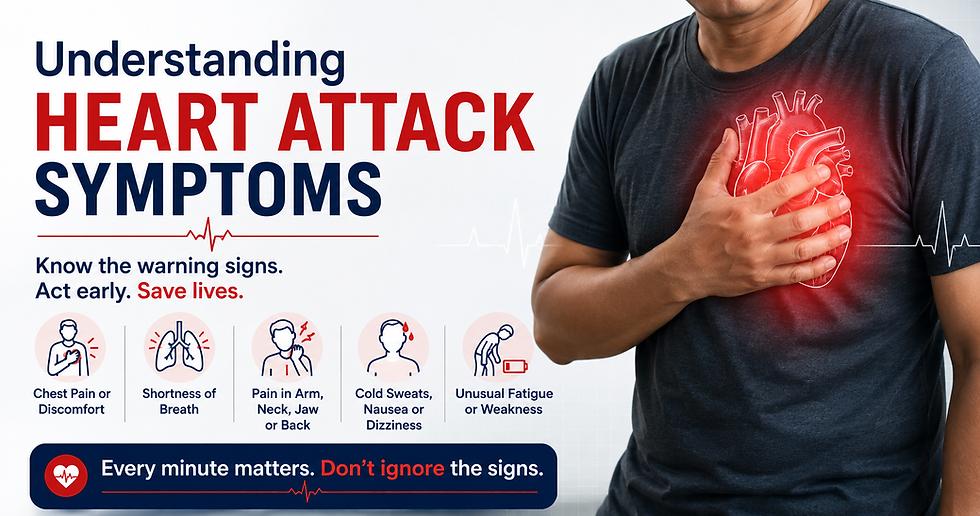
Every Minute Matters: Do You Know the Warning Signs of a Heart Attack?
A heart attack does not always look like the dramatic event shown in movies.
Sometimes it begins with severe chest discomfort. Sometimes the symptoms are milder, develop gradually, or include breathlessness, nausea, sweating, unusual tiredness or discomfort in another part of the upper body.
That is why understanding heart attack symptoms matters.
Recognising a potentially serious symptom early can help a person seek appropriate medical care without unnecessary delay. The American Heart Association notes that many heart attacks involve chest discomfort, but symptoms can also include discomfort in the arms, back, neck, jaw or stomach, shortness of breath, nausea, cold sweats and lightheadedness.
At Shreejii Hospital & Research Centre, Kandivali East, our aim is to help patients and families become more aware of heart health and understand when professional medical evaluation is important.
What Is a Heart Attack?
A heart attack, medically known as a myocardial infarction, occurs when blood flow supplying the heart muscle becomes severely reduced or blocked.
The heart muscle needs a continuous supply of oxygen-rich blood. When that supply is interrupted, the affected heart muscle can become damaged.
A common cause is a blockage in a coronary artery, often associated with the buildup of plaque inside the blood vessels.
The longer the interruption in blood flow continues, the greater the potential for heart muscle damage.
This is why every minute matters when a heart attack is suspected.
What Does a Heart Attack Feel Like?
There is no single sensation that every person experiences.
The most recognised symptom is chest discomfort, which may feel like:
Pressure
Tightness
Squeezing
Fullness
Heaviness
Pain or discomfort
The discomfort may last several minutes or may disappear and return.
Importantly, not every episode of chest pain is a heart attack. Chest discomfort can have cardiac and non-cardiac causes, including conditions such as indigestion or heartburn. However, sudden, severe or concerning chest symptoms should not be dismissed or self-diagnosed.
7 Important Heart Attack Symptoms to Know
1. Chest Pain, Pressure or Discomfort
Chest discomfort is one of the most important warning signs.
It may be felt in the centre of the chest and can feel like pressure, squeezing, fullness or pain.
If chest discomfort is persistent, severe, recurrent or accompanied by other concerning symptoms, seek urgent medical attention.
2. Pain or Discomfort Beyond the Chest
Heart attack symptoms may involve other areas of the upper body.
Discomfort can occur in:
One or both arms
Shoulders
Back
Neck
Jaw
Upper abdomen
This is particularly important because some people may not initially recognise these sensations as potentially heart-related.
3. Shortness of Breath
Sudden or unexplained shortness of breath can occur during a heart attack, with or without chest discomfort.
If breathlessness is new, severe, or occurs alongside chest pressure, sweating, nausea, dizziness or other concerning symptoms, it requires prompt medical attention.
4. Cold Sweats
Breaking out in an unexplained cold sweat can be another warning sign.
Sweating alone does not mean that someone is having a heart attack. But when cold sweating occurs together with chest discomfort, breathlessness, nausea or other symptoms, it should not be ignored.
5. Nausea or Vomiting
Some people experiencing a heart attack may experience nausea or vomiting.
This can sometimes be mistaken for a stomach problem.
Women may be more likely than men to experience accompanying symptoms such as nausea, shortness of breath and back or jaw discomfort, although chest discomfort remains a common symptom in women too.
6. Lightheadedness or Dizziness
Feeling suddenly lightheaded, faint or unusually dizzy can occur with a heart attack.
Again, dizziness has many possible causes. But when it occurs alongside chest discomfort, breathlessness, sweating or other warning signs, it deserves urgent medical assessment.
7. Unusual Fatigue or Weakness
Some people may experience unusual tiredness or weakness, particularly when it is new or unexplained.
This symptom may be less obvious than chest pain and can easily be attributed to stress, lack of sleep or overexertion.
The important point is not to assume that every episode of fatigue is heart-related—but to recognise when a new combination of symptoms requires professional evaluation.
Can Heart Attack Symptoms Be Different in Women?
Yes.
Women can experience the same common heart attack symptoms as men, including chest pain or discomfort. However, women may also experience symptoms such as:
Shortness of breath
Nausea or vomiting
Unusual tiredness or weakness
Back discomfort
Shoulder discomfort
Jaw discomfort
These symptoms can be mistaken for less serious conditions, which may delay medical attention.
The safest approach is not to try to determine whether symptoms are “typical” or “atypical” at home. Concerning symptoms deserve medical evaluation.
What About a “Silent” Heart Attack?
Not every heart attack causes dramatic symptoms.
A silent heart attack may involve mild, unusual or unnoticed symptoms. Some people may experience symptoms such as fatigue, indigestion or discomfort in the back or jaw and may not realise that a heart attack has occurred until later testing.
This is one reason regular attention to cardiovascular risk factors and appropriate health evaluation is important.
Who Should Pay Particular Attention to Heart Health?
Heart disease risk can be influenced by several factors, including:
Increasing age
Diabetes
High blood pressure
High cholesterol
Smoking or tobacco use
Being overweight or obese
Family history of cardiovascular disease
Certain chronic medical conditions
Having risk factors does not mean that a person will have a heart attack. Conversely, the absence of known risk factors does not completely eliminate the possibility of heart disease.
That is why preventive care and appropriate cardiovascular evaluation matter.
What Should You Do If You Suspect a Heart Attack?
This is the most important part of understanding heart attack symptoms.
If you or someone with you develops symptoms that could indicate a heart attack:
Do not wait to see if the symptoms disappear.
Do not attempt to diagnose the cause yourself.
Seek emergency medical care immediately.
The American Heart Association recommends activating emergency medical services when heart attack symptoms are suspected because emergency teams can begin care while transporting the patient and coordinate hospital treatment.
In India, use your local emergency medical service or go to the nearest appropriate emergency department according to the situation.
Do not drive yourself if you are experiencing potentially serious cardiac symptoms.
How Is a Suspected Heart Attack Evaluated?
A healthcare professional will assess the patient's symptoms, medical history and clinical condition.
Depending on the situation, cardiac evaluation may include:
ECG — Electrocardiogram
An ECG records the heart's electrical activity and is an important part of evaluating suspected acute cardiac conditions.
Blood Tests
Cardiac biomarkers, particularly high-sensitivity troponin, are important in evaluating possible myocardial injury. The American Heart Association/American College of Cardiology chest-pain guideline identifies high-sensitivity troponin as the preferred biomarker standard for diagnosing myocardial infarction.
Further Cardiac Investigations
Depending on the clinical assessment, doctors may recommend additional cardiac tests or imaging.
The important point is that an ECG alone should not be treated as a complete self-screening tool. The diagnosis of a heart attack requires clinical assessment and appropriate investigations.
Why Emergency Cardiac Care Matters
A suspected heart attack is not something that should be managed by waiting at home.
The underlying problem may involve reduced or blocked blood flow to the heart muscle. Rapid medical assessment allows healthcare professionals to determine what is happening and initiate appropriate treatment as quickly as possible.
The American Heart Association emphasises that early treatment can reduce heart damage and improve survival.
Every minute matters.
Cardiac Care at Shreejii Hospital & Research Centre
Located in Kandivali East, Mumbai, Shreejii Hospital & Research Centre provides multidisciplinary healthcare services, including Cardiology, General Medicine, General Surgery, Neurology, Orthopaedics and other specialties. The hospital's website also lists a 24/7 Emergency Unit, ICCU, ECG, Cathlab and cardiac diagnostic and treatment services.
Its cardiology service includes cardiac evaluation and treatment services, while the hospital's Cathlab page describes facilities for procedures including angiography, angioplasty and stent placement.
This multidisciplinary environment can be particularly relevant when patients require coordinated medical, cardiac and critical-care support.
Heart Health Starts With Awareness
Knowing heart attack symptoms does not mean diagnosing yourself.
It means knowing when a symptom deserves attention.
Remember these key warning signs:
Chest discomfortUpper-body discomfortShortness of breathCold sweatingNauseaLightheadednessUnusual fatigue
If symptoms are sudden, severe, persistent or concerning, seek emergency medical care rather than waiting for them to pass.
And even when symptoms are not an emergency, unexplained or recurring symptoms deserve discussion with a qualified Heart Specialist or Cardiologist.
Your heart deserves attention—not assumptions.
Frequently Asked Questions
1. What are the most common heart attack symptoms?
Common symptoms include chest pressure, squeezing, fullness or pain; discomfort in one or both arms, the back, neck, jaw or stomach; shortness of breath; cold sweating; nausea; and lightheadedness. Symptoms can vary between individuals.
2. Is chest pain always a sign of a heart attack?
No. Chest pain can have several causes, including heartburn and other non-cardiac conditions. However, sudden, severe or concerning chest pain—especially when accompanied by breathlessness, sweating, nausea or other warning signs—should not be ignored or self-diagnosed.
3. Can a heart attack happen without chest pain?
Yes. Some people can experience symptoms such as shortness of breath, nausea, unusual fatigue, lightheadedness or discomfort in the back, jaw, arms or other areas without prominent chest discomfort. Some heart attacks can also have mild or unnoticed symptoms.
4. Can an ECG detect a heart attack?
An ECG is an important test when a heart attack is suspected, but it is not the only part of the evaluation. Doctors consider the patient's symptoms, clinical findings and appropriate blood tests—including cardiac troponin—along with ECG findings to evaluate possible myocardial infarction.
5. When should I seek emergency care for chest pain?
Seek emergency medical care immediately when chest pain or discomfort is sudden, severe, persistent or accompanied by symptoms such as shortness of breath, cold sweating, nausea, lightheadedness or discomfort spreading to the arm, back, neck or jaw. If you are unsure whether symptoms are serious, it is safer to seek urgent professional assessment rather than wait.
Book a Cardiac Evaluation
If you have recurring chest discomfort, unexplained breathlessness, unusual fatigue, palpitations, or other concerns about your heart health, speak with a qualified medical professional.
For emergency symptoms, seek emergency medical care immediately rather than waiting for a routine appointment.
For non-emergency cardiac concerns, you can explore the Cardiology services at Shreejii Hospital & Research Centre.
📍 Kandivali East, Mumbai📞 9004845281 | 8450902203🌐 www.shreejiihospitals.com
Every minute matters. Know the symptoms. Protect your heart.


Comments